Quick Answer
If you are researching How to Avoid Customs Fees from China: Guide, the safest approach is to check duty rules, tax thresholds, product classification, declared value, shipping method and documentation before importing. This guide explains what to check before paying and how a China shopping agent can reduce ordering, QC, consolidation and shipping mistakes.
| Area | What to check | Why it matters |
|---|---|---|
| Product | Size, color, quantity, photos, variants and stock. | Most mistakes start before payment. |
| Seller | Reputation, communication, price and terms. | Helps avoid delays and wrong products. |
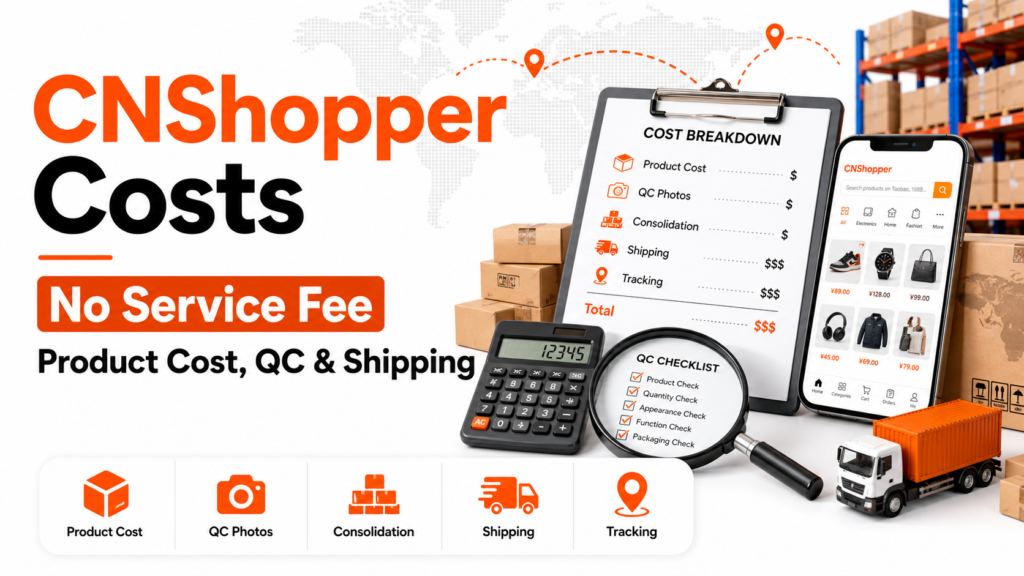
| Total cost | Product price, domestic shipping, service fee, international shipping and customs. | The final price can be very different from the item price. |
| Shipping | Route, delivery time, tracking, restrictions and volumetric weight. | Affects cost, reliability and customs risk. |
Key Questions Before You Buy
What is the safest way to move forward?
The best approach is to compare product details, seller reliability, total landed cost, shipping route and customs risk before paying. For Chinese marketplaces, an agent can help with purchase, QC photos, consolidation and international shipping.
Do I need a China shopping agent?
An agent is useful when the platform does not support international payment, the seller only ships inside China, you need product checks, or you want to combine multiple parcels into one shipment.
How can I reduce cost and risk?
Start with smaller orders, confirm product details, review QC photos, compare shipping routes and check customs or restricted-product rules before international delivery.
Related CNShopper guides: How to buy from China · international shipping from China · China shopping agent comparison · China shopping agent fees · Taobao vs 1688 vs Tmall.
How to Avoid Customs Fees from China: 2026 Guide
Table of Contents
- What Are Customs Fees on Imports from China?
- Strategy 1: The $800 De Minimis Rule
- Strategy 2: Choose the Right Shipping Method
- Strategy 3: Check the HTS Classification
- Strategy 4: Use a Purchasing Agent
- Common Mistakes to Avoid
- FAQs
Shipping from China to the United States often raises one big question: do I have to pay customs fees, and how can I avoid them? One Reddit user on r/taobao recently asked: “Do I have to pay customs on my Taobao shipment to the US? The agent says my package is valued at $400…” The answer depends on rules most shoppers don’t know about. This guide walks you through exactly how customs fees work and the legal ways to minimize them.
What Are Customs Fees on Imports from China?
When goods enter the United States from China, U.S. Customs and Border Protection (CBP) may assess several types of fees. Understanding each one helps you predict your total landed cost before you place an order.
- Duty — a percentage of the shipment’s value, based on the product’s HTS code. Rates vary from 0% to over 30% depending on product category.
- Merchandise Processing Fee (MPF) — 0.3464% of the declared value, capped at $528.58 for formal entries. For informal entries (under $2,500), the MPF is a flat fee of approximately $2 to $9.
- Harbor Maintenance Fee (HMF) — 0.125% of the cargo value, only applies to ocean freight that requires a formal entry.
According to U.S. Customs and Border Protection, most personal shipments from China fall into the informal entry category, which means lower processing fees and simpler paperwork.
Strategy 1: The $800 De Minimis Rule
The most effective way to avoid customs duties on shipments from China is the $800 de minimis threshold (19 U.S.C. 1321). If the total fair retail value of your shipment is $800 or less, it generally enters duty-free with minimal customs processing.
- The threshold applies per person per day for shipments arriving by mail or courier. You can receive multiple packages on different days and each one qualifies individually.
- It covers most consumer goods, with exceptions for alcohol, tobacco, perfume containing alcohol, and certain textiles.
- When using a purchasing agent like cnshopper.com, the declared value should reflect the actual purchase price. Never artificially lower it just to stay under the threshold.
- Shipping and insurance costs are generally not counted toward the $800 limit.
For more details on US import taxes, see our guide on Customs Duty from China to USA: 2026 Rates.
Strategy 2: Choose the Right Shipping Method
Your shipping method affects how customs processes your package. Different carriers have different clearance procedures.
- Courier Services (DHL, FedEx, UPS) — Automatic customs clearance included. Faster processing, may trigger MPF even for smaller shipments. Best for shipments under $800.
- China Post / ePacket / Air Mail — Slower transit (2-4 weeks), less scrutiny for low-value parcels. De minimis rule applies the same way.
- Sea Freight (LCL / FCL) — Requires formal customs entry for most shipments over $2,500. Duties and fees are almost always unavoidable for commercial quantities.
For most personal shoppers buying from platforms like Taobao or Tmall, courier services or China Post are the most practical options. Your purchasing agent can help you choose the best method based on your order size and budget.
Strategy 3: Check the HTS Classification
Not all products attract the same duty rate. Some items from China face higher tariffs under Section 301 (7.5% to 25% on top of base duty), while others are duty-free. You can look up your product’s HTS code on the USITC HTS Tool to check the base duty rate and any additional tariffs.
- Electronics (smartphones, laptops): often 0% base duty, but some face Section 301 tariffs.
- Clothing and textiles: 10% to 32% duty depending on fabric and garment type.
- Toys and games: 0% to 6.8% duty for most categories.
Knowing your HTS code before you ship helps you estimate total cost accurately and avoid surprises at delivery. Official tariff information is available from the U.S. International Trade Commission.
Strategy 4: Use a Purchasing Agent
Working with a professional China purchasing agent helps you manage customs risk in several important ways. This is especially valuable for first-time buyers unfamiliar with international shipping procedures.
- Consolidation — Your agent can combine purchases from different Chinese websites into one package, helping you stay under the $800 de minimis threshold while saving on shipping.
- Correct classification — Experienced agents classify products properly, helping you pay the correct duty rate.
- Proper documentation — Your agent prepares accurate customs paperwork, packing lists, and commercial invoices that meet CBP requirements.
- Quality inspection — Before shipping, agents inspect items for defects, preventing costly returns and customs headaches.
Common Customs Mistakes to Avoid
Many shoppers unknowingly make mistakes that result in higher fees, delayed shipments, or legal problems. Here are the most common ones:
- Undervaluing shipments — Declaring a lower value to avoid duties is customs fraud. CBP can seize goods, issue fines, or pursue legal action.
- Ignoring Section 301 tariffs — Products from China in certain categories face additional tariffs of 7.5% to 25%. Check the latest tariff list before shipping.
- Artificially splitting shipments — CBP can group split packages from the same sender arriving on the same day. Splitting a large order does not guarantee duty-free treatment.
- Shipping prohibited items — Always verify your products are allowed for import into the US. Prohibited items can be seized and destroyed.
Most customs problems are avoidable with proper preparation and the right help. Taking time to understand these common pitfalls will save you money and frustration.
Frequently Asked Questions
Can I avoid customs fees on every shipment from China to the US?
Not always. Shipments valued over $800 are subject to duty. However, you can reduce the impact by consolidating orders, choosing the right shipping method, and understanding product classification.
Is it illegal to ask a seller to mark my package as a gift?
Yes, if the item was not actually purchased as a gift. Misrepresenting the nature or value of a shipment to avoid customs duties is fraud. CBP routinely inspects packages and can fine both sender and recipient.
Does cnshopper help with customs forms?
Yes. When you use cnshopper.com as your purchasing agent, they prepare accurate customs documentation based on your actual purchases, help consolidate orders to stay under duty-free thresholds, and ensure your shipment meets all destination country requirements. Learn more on the cnshopper website.
What happens if my package is held by customs?
CBP will typically send a notice explaining what is needed. You may need to provide additional documentation, pay duties, or fill out a formal entry form. Most low-value packages are released within a few days. If you used a purchasing agent, they can help resolve the hold.
Conclusion
Avoiding customs fees from China is about understanding the rules and using them to your advantage. The $800 de minimis threshold is your strongest tool for personal shipments. For larger orders, correct classification, proper documentation, and a reliable purchasing agent can make a real difference in your total cost.
Ready to shop? Start searching for products on cnshopper.com and let us handle the shipping, documentation, and customs compliance for you.
For more details on US import taxes, read our guide on Customs Duty from China to USA: 2026 Rates and learn about China shopping agent fees and costs.