Quick Answer
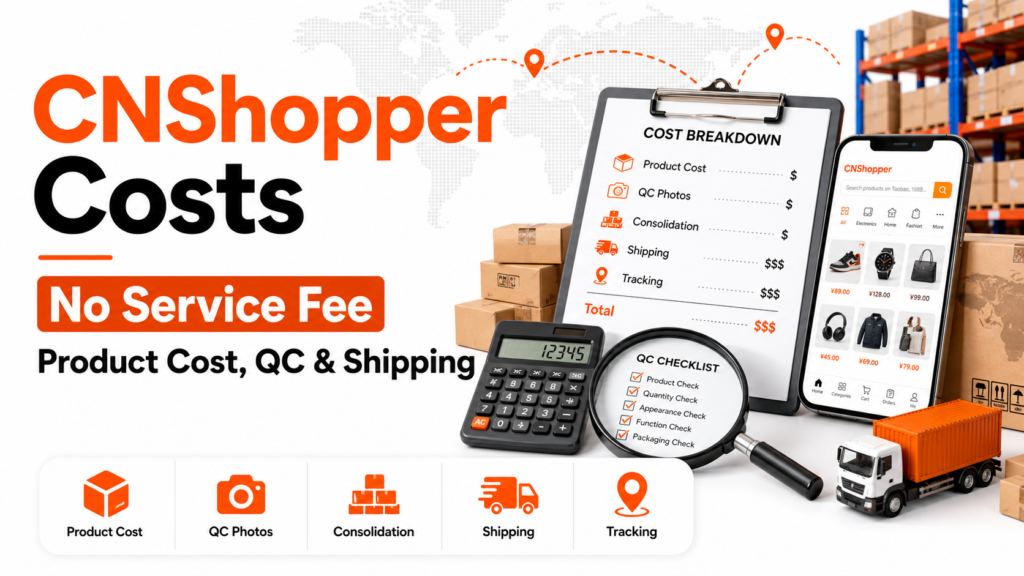
If you are researching US Customs Duty from China: Complete Guide, the safest approach is to check duty rules, tax thresholds, product classification, declared value, shipping method and documentation before importing. This guide explains what to check before paying and how a China shopping agent can reduce ordering, QC, consolidation and shipping mistakes.
Key Questions Before You Buy
What is the safest way to move forward?
The best approach is to compare product details, seller reliability, total landed cost, shipping route and customs risk before paying. For Chinese marketplaces, an agent can help with purchase, QC photos, consolidation and international shipping.
Do I need a China shopping agent?
An agent is useful when the platform does not support international payment, the seller only ships inside China, you need product checks, or you want to combine multiple parcels into one shipment.
How can I reduce cost and risk?
Start with smaller orders, confirm product details, review QC photos, compare shipping routes and check customs or restricted-product rules before international delivery.
Related CNShopper guides: How to buy from China · international shipping from China · China shopping agent comparison · China shopping agent fees · Taobao vs 1688 vs Tmall.
If you’re importing goods from China to the United States, customs duties are one of the biggest cost factors you’ll face. Many first-time importers underestimate how much they owe at the border — and end up surprised by unexpected fees.
This guide explains how US customs duties on Chinese imports work in 2026, what current tariff rates look like, and exactly how to calculate what you’ll pay before your shipment arrives.
📑 Table of Contents
- What Are US Customs Duties on Chinese Imports?
- How Are Customs Duties Calculated?
- Current US Tariff Rates on Chinese Goods in 2026
- Step-by-Step: How to Calculate Your Customs Duty
- Common Mistakes Importers Make
- How to Reduce Your Customs Duty Costs
- Do I Pay Duty on Gifts or Samples?
- Customs Duty FAQ
- Final Thoughts
What Are US Customs Duties on Chinese Imports?
A customs duty is a tax imposed by the US government on goods imported from foreign countries — including China. The amount you pay depends on three main factors: the product’s classification, its declared value, and its country of origin.
Since 2018, many goods imported from China have been subject to additional tariffs under Section 301 of the Trade Act of 1974. These Section 301 tariffs remain active in 2026 and apply to thousands of product categories beyond standard most-favored-nation (MFN) rates.
How Are Customs Duties Calculated?
The basic formula is straightforward:
Customs Duty = (Declared Value + Freight + Insurance) x Duty Rate %
However, the calculation involves several components you need to understand.
1. Find Your HS Code
Every product imported into the US must be classified under a Harmonized System (HS) code. This 10-digit number determines the base duty rate. The US uses the HTSUS (Harmonized Tariff Schedule of the United States), maintained by the US International Trade Commission (USITC).
For example:
- Electrical appliances (e.g., fans, blenders): HS 8414-8415, base rate typically 2-4%
- Clothing: HS 61-62, base rate 12-32%
- Toys: HS 9503, base rate 0% but Section 301 adds 25%
- Electronics (smartphones, laptops): often 0% base rate, but subject to Section 301 tariffs in certain categories
You can look up your product’s HS code using the USITC HTSUS online tool.
2. Determine the Applicable Duty Rate
The duty rate depends on:
- Column 1 (MFN) rate: The standard rate for WTO members, including China, ranging from 0% to 37.5% depending on the product.
- Section 301 tariffs: Additional tariffs on Chinese goods, ranging from 7.5% to 100% depending on the product category. Affected categories include machinery, electronics, textiles, steel, and furniture.
- AD/CVD duties: Anti-dumping and countervailing duties apply to specific Chinese products like aluminum foil and wooden cabinets.
3. Calculate the Duty Value
CBP (US Customs and Border Protection) uses the transaction value method — the price you actually paid for the goods. This includes:
- The purchase price of the goods
- Freight costs to the US port (CIF value)
- Insurance charges
- Packing costs
- Commissions and royalties paid to the seller
Import duties apply to this total landed cost, not just the product price alone.
Current US Tariff Rates on Chinese Goods in 2026
As of 2026, the US maintains Section 301 tariffs on Chinese imports across many categories. Here are approximate current rates for common product categories:
| Product Category | Approximate MFN Rate | Section 301 Add-On | Total Effective Rate |
|---|---|---|---|
| Electronics | 0-5% | 0-7.5% | 0-12.5% |
| Machinery | 0-4% | 25% | 25-29% |
| Furniture | 0-5% | 25% | 25-30% |
| Textiles and Clothing | 8-32% | 7.5-25% | 15.5-57% |
| Toys and Sporting Goods | 0-4% | 25% | 25-29% |
| Footwear | 2-48% | 7.5-25% | 9.5-73% |
| Steel Products | 0-5% | 25% + Section 232 | 25-50% |
Important: Tariff rates change frequently. Always verify rates using the USITC HTSUS tool or check CBP trade resources before shipping.
Step-by-Step: How to Calculate Your Customs Duty
Let us walk through a real example to make it concrete.
Scenario: You are importing ceramic tableware (HS 6911.10.8010) from China worth $5,000. Shipping costs $800, insurance $100.
- Total landed value: $5,000 + $800 + $100 = $5,900
- MFN duty rate for ceramic tableware: 15%
- Section 301 rate for tableware: 25%
- Total duty rate: 15% + 25% = 40%
- Estimated duty: $5,900 x 40% = $2,360
In this example, you would owe approximately $2,360 in customs duties — nearly half the value of the goods themselves. This is why understanding duty rates before you order is critical for your profit margins.
Common Mistakes Importers Make with US Customs
Using the Wrong HS Code
Misclassifying your product is the most common error. Even small differences matter — a portable fan (HS 8414.51) and an industrial fan (HS 8414.59) face different rates. Using an incorrect code can lead to overpayment or penalties.
Forgetting Section 301 Tariffs
Many importers calculate duty based only on the MFN rate and miss the additional Section 301 tariff. This is the most common source of surprise fees for Chinese imports and can easily double your expected costs.
Not Checking De Minimis Rules
Shipments valued under $800 (de minimis threshold) can enter the US duty-free. However, in 2026, the US has proposed stricter rules on de minimis shipments from China. Check CBP de minimis page for the latest updates before relying on this exemption.
How to Reduce Your Customs Duty Costs
- Use correct HS codes: Accurate classification ensures you do not overpay.
- Check duty drawback eligibility: US importers can recover up to 99% of duties on goods later exported.
- Consider shipping via a shopping agent: A service like CNShopper can help you review product classification and shipping options before you commit to a purchase.
- Explore smaller batch shipping: In some cases, partial shipping in smaller batches under de minimis limits may reduce duty exposure, though regulations are tightening.
- Apply for exclusions: The USITC still grants Section 301 tariff exclusions for certain products. Check current exclusion lists on the USTR website.
Do I Pay Duty on Gifts or Samples from China?
Gifts valued under $100 sent from China to the US are generally duty-free. For commercial samples, CBP requires them to be properly declared. Marking commercial shipments as \”gift\” is illegal and can result in seizure or penalties.
For a similar breakdown of shipping times from China, check our guide on shipping from China to USA delivery times.
Customs Duty FAQ
Who pays customs duty from China to USA?
The importer of record — either the buyer in the US or their customs broker — is responsible for paying all customs duties, taxes, and fees.
Do I need a customs broker to import from China?
Technically no — you can self-file with CBP using ACE (Automated Commercial Environment). But most importers use a licensed customs broker to avoid costly classification and documentation errors.
How long does US customs clearance take for Chinese imports?
Most shipments clear within 24-48 hours if documentation is complete. Shipments requiring inspection or with errors can be delayed for weeks.
Can I get a refund on overpaid customs duties?
Yes. If you overpaid due to an incorrect HS code or duty rate, you can file a protest with CBP within 180 days of liquidation. Many importers recover money through post-entry amendments.
Final Thoughts
US customs duties on Chinese imports can significantly impact your total cost — sometimes doubling what you expected to pay. The key is preparation: know your product’s HS code, check current Section 301 rates, and calculate your landed cost before placing an order.
Using a reliable China shopping agent or sourcing partner can help you navigate classification and shipping decisions more confidently.
If you are ready to import from China and want to know your true costs upfront, try a free shipping estimate on CNShopper’s search and compare page.
For official tariff information, always check the USITC tariff page and CBP trade resources.